
Knee and leg condition · Canton, OH
Knee pain treatment in Canton, OH
Knee pain can come from worn cartilage, irritated tendons or bursae, a ligament injury or a kneecap that does not track well, and it can make walking, stairs and kneeling hard. At Belden Village Chiropractic and Wellness Center in Canton, OH, we start with a full exam of your knee and how you move, then walk you through non-surgical care options.
Reviewed by Dr. Brent Ungar, DC · Last reviewed [date]
- 40+ years in practice
- Non-surgical care
- Custom orthotics on site
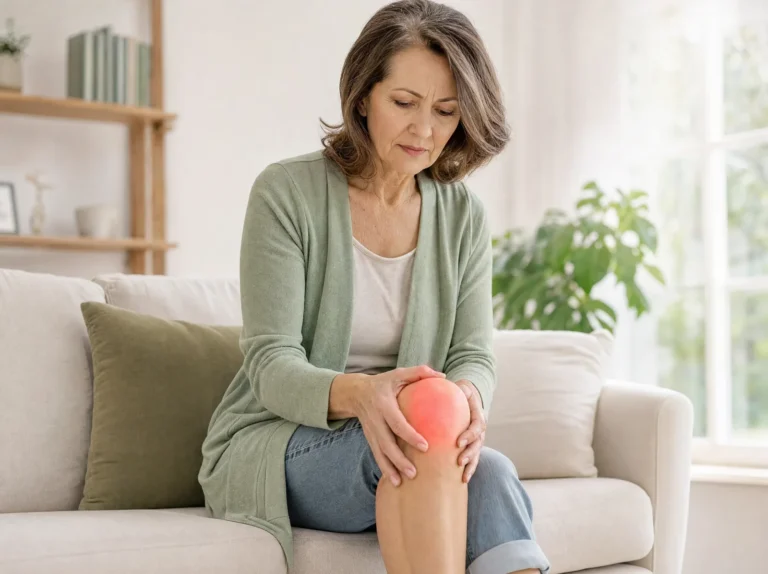
Knee pain at a glance
| Also called | Knee joint pain, runner’s knee, jumper’s knee, knee arthritis |
|---|---|
| Body area | Front, inside, outside or back of the knee, sometimes the shin or thigh |
| Structures involved | Thigh bone, shinbone, kneecap, cartilage, ligaments, tendons and bursae |
| Common symptoms | Pain, swelling, stiffness, clicking, giving way, trouble with stairs or kneeling |
| Common causes | Arthritis, overuse, ligament injuries, tendinitis, bursitis, kneecap tracking problems |
| How we evaluate | Health history, knee, hip and foot exam, walking assessment, imaging if needed |
| Care options | Chiropractic adjustments, physical rehabilitation, low-level laser therapy, custom foot orthotics |
| Referral needed? | [confirm with practice] |
What is knee pain?
Knee pain is pain in or around the knee joint, where the thigh bone, shinbone and kneecap meet. It can come from worn cartilage, irritated tendons or bursae, or injured ligaments, and it can range from mild stiffness to pain that makes walking, stairs and kneeling hard.
Cartilage cushions the bones so the joint moves smoothly. Ligaments hold the knee steady, and tendons connect the muscles to the bones.
How your hips and feet move also affects the knee. That is why care starts with a full exam of your knee, hips and feet.
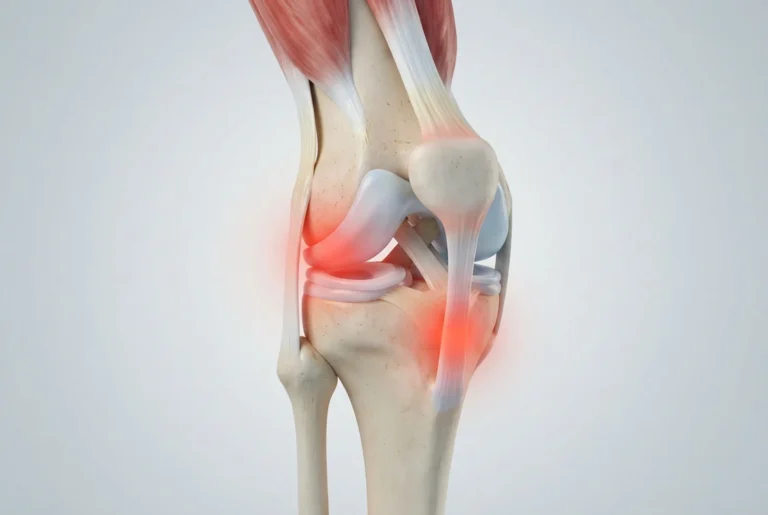
Knee pain symptoms and causes
What does knee pain feel like?
Symptoms depend on what part of the knee is involved and how it started.
- Pain around or behind the kneecap, often worse on stairs or when squatting
- Swelling or warmth around the knee
- Stiffness, especially in the morning or after sitting
- Clicking, popping or grinding when you bend the knee
- A knee that feels unstable or gives way
- Trouble kneeling, standing up from a chair or walking downhill
What causes knee pain?
Some knee problems follow an injury, and others build over time.
- Osteoarthritis, the wearing down of cartilage over time
- Rheumatoid arthritis and other inflammatory joint conditions
- Ligament injuries, such as to the ACL or MCL, from twisting or impact
- Patellar tendinitis from repeated jumping or running
- Bursitis, irritation of the cushioning sacs around the knee
- A kneecap that slips out of place or does not track well
- Risk factors: extra body weight, a past knee injury, weak hip and thigh muscles, foot mechanics
Which knee problem is it?
Many knee problems feel alike. Your exam helps tell them apart, and imaging is ordered if a tear or fracture is possible.
| Feature | Knee arthritis | Patellar tendinitis | Ligament injury |
|---|---|---|---|
| Where it hurts | Inside of the knee or the whole joint | Just below the kneecap | Inside or center of the knee, depending on the ligament |
| Other signs | Morning stiffness, grinding, swelling after activity | A tender tendon; pain at the start of activity | A pop at the time of injury, swelling, a knee that gives way |
| Often worse with | Long walks, stairs and standing up after sitting | Jumping, running and squatting | Twisting, pivoting or changing direction |
Get emergency care right away if
- You cannot put weight on the leg after an injury
- The knee or kneecap looks out of place or out of shape
- You heard a pop and the knee swelled quickly
- The knee is red, hot and swollen, or you have a fever
- Your calf is swollen, painful or warm, especially after a long trip or surgery
- Your leg or foot is numb, pale or cold
What to expect at our Canton office
Our typical process involves:
- Obtaining a thorough history of the problem and health history of the patient
- Performing a complete examination of the patient
- Obtaining any diagnostic tests (if necessary) to better understand the problem
- Discussing the diagnosis with you
- Reviewing the findings and treatment options with you
Every case is different and results vary.
Your first visit for knee pain
Before
Wear shorts or loose pants and bring the shoes you wear most, plus any imaging reports and a list of medications.
During
We ask how the pain started and what makes it worse, then check your knee movement and stability, how you walk, and your hips and feet.
After
We explain what we found and the options that fit, so you can decide how to move forward.
Knee pain care options in Canton
Every care plan depends on your exam. Options your provider may recommend include:
- Chiropractic adjustments Gentle care for the knee and the joints above and below it, such as the hip, ankle and foot.
- Physical rehabilitation Strengthening for the thigh and hip muscles that support and steady the knee.
- Low-level laser therapy Non-invasive light therapy that may help calm irritated tendons and tissue around the knee.
- Custom foot orthotics Inserts made from a 3D scan of your feet that may reduce strain on the knees.
If imaging shows a torn ligament or meniscus, advanced arthritis or a fracture, your provider can refer you and coordinate with your physician or an orthopedic specialist.
Knee pain making stairs or kneeling hard?
Your knee pain care team

Dr. Brent Ungar, DC
Chiropractic Physician | Certified Chiropractic Sports Physician | Laser Therapy Educator

Dr. Anthony Gatelaro, DC
Chiropractic Physician | Over 30 Years of Experience
Knee pain questions we hear in Canton
Chiropractic care is a conservative option for some types of knee pain, especially when hip, ankle or foot mechanics add strain to the knee. We review your history and exam first and refer you to a physician or orthopedic specialist if we find signs that need other care.
They can. Weak hip muscles, flat feet or other foot mechanics can change how the knee moves and add stress to it. That is why we check your hips and feet as well as your knee.
It depends on the cause. Many people do better with gentle, low-impact activity than with full rest, but some injuries need time off the leg. Your provider can tell you which movements to do and which to avoid for now.
Not always. Painless clicking is common. Get it checked if it comes with pain, swelling, locking or a knee that gives way.
[Confirm referral wording with practice] Imaging is ordered only if your exam shows it is needed, such as when arthritis, a tear or a fracture is possible.
Belden Village Chiropractic and Wellness Center treats knee pain at 4200 Munson Street NW, Suite B, in Canton, near North Canton, Massillon and the Belden Village area.
Visit our Canton office
- Address
- 4200 Munson Street NW, Suite B, Canton, OH 44718
- Phone
- 330-493-0009
- Hours
- Mon–Thu: Dr. Ungar 7:45 a.m.–6 p.m.
Mon–Thu: Dr. Gatelaro 8 a.m.–6 p.m.
Fri–Sun: Closed - Parking
- [parking and entrance notes]
Patients visit us from Canton, North Canton and across Stark County.
Find out what is behind your knee pain
Start with a full exam of your knee, hips and feet, and a clear talk about your options. Call 330-493-0009 or send a request.