
Low back and neck condition · Canton, OH
Degenerative disc disease treatment in Canton, OH
Degenerative disc disease is the gradual wear of the discs between the bones of the spine, which can cause back or neck pain, stiffness and nerve irritation. At Belden Village Chiropractic and Wellness Center in Canton, OH, we start with a full exam and imaging review, then walk you through non-surgical care options.
Reviewed by Dr. Brent Ungar, DC · Last reviewed [date]
- 40+ years in practice
- Non-surgical care
- Spinal decompression on site
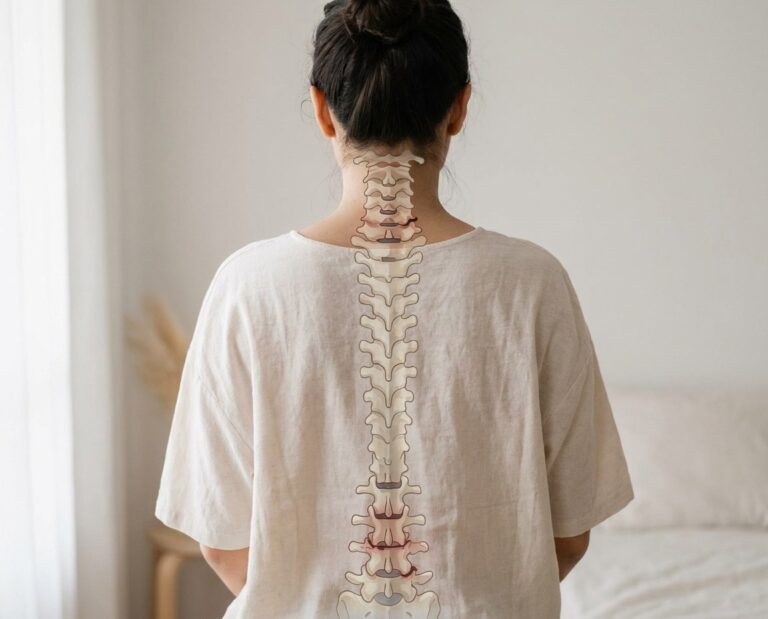
Degenerative disc disease at a glance
| Also called | DDD, disc degeneration, degenerative disc changes |
|---|---|
| Body area | Most often the low back (lumbar spine) or neck (cervical spine) |
| Structure involved | Spinal discs, plus nearby joints and nerves as discs lose height |
| Common symptoms | Back or neck pain that comes and goes, stiffness, pain with sitting or bending, tingling into an arm or leg |
| Common causes | Normal aging, repetitive strain, past injury, family history, smoking |
| How we evaluate | Health history, physical and neurological exam, imaging review (MRI if needed) |
| Care options | Spinal decompression, chiropractic adjustments, physical rehabilitation, home exercise |
| Referral needed? | [confirm with practice] |
What is degenerative disc disease?
Degenerative disc disease (DDD) is not a disease in the usual sense. It describes spinal discs that have lost water, height and flexibility over time, so they cushion less and can irritate nearby joints and nerves. It most often affects the low back and neck.
Disc changes are a normal part of aging, and many people have them on an MRI without pain. When degeneration does cause symptoms, the disc, the nearby joints or a pinched nerve may be involved.
Over time, worn discs can lead to bone spurs, spinal stenosis or a herniated disc. That is why care starts with a full exam and a review of your imaging.
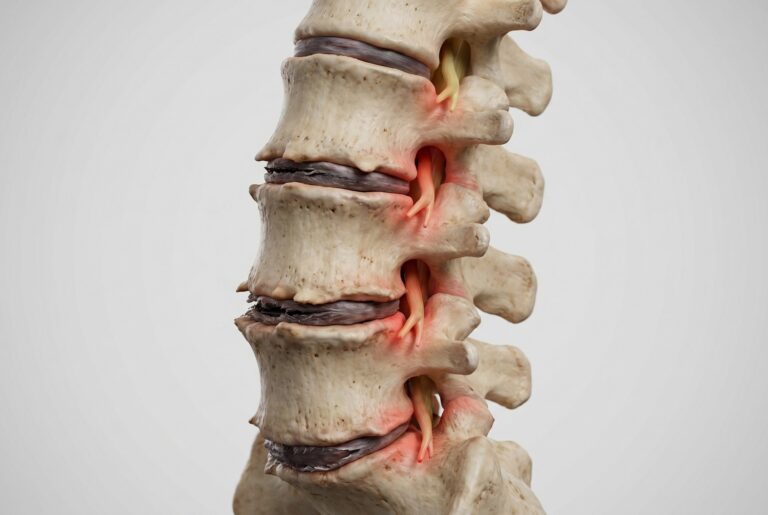
Degenerative disc disease symptoms and causes
What does degenerative disc disease feel like?
Symptoms often come and go over months or years.
- Low back or neck pain that flares up and settles down
- Pain that gets worse with long sitting, bending forward or twisting
- Stiffness in the morning or after sitting still
- Pain, numbness or tingling into the arms or legs
- Weakness or reduced grip strength
- Flare-ups after a small movement or strain
What causes degenerative disc disease?
Discs change with age, and daily strain, injury and habits can speed that up.
- Normal aging that dries out the discs over time
- Repeated bending, lifting, twisting or long hours sitting
- A past back or neck injury, even one that has healed
- Family history
- Risk factors: smoking, inactivity, extra body weight, physically demanding work
Is it degenerative disc disease or something else?
Other spine problems can cause similar pain, and DDD can lead to some of them. Your exam and imaging review help tell them apart.
| Feature | Degenerative disc disease | Herniated disc | Spinal stenosis |
|---|---|---|---|
| Where it hurts | Low back or neck; pain often comes and goes | Back or neck, often traveling down one arm or leg | Low back or neck, often in both legs when walking |
| Other signs | Stiffness, especially in the morning or after sitting | Numbness, tingling or weakness along one nerve path | Leg heaviness or cramping that eases when sitting or leaning forward |
| Often worse with | Long sitting, bending forward or twisting | Sitting, bending, coughing or sneezing | Standing and walking |
Get emergency care right away if
- You lose control of your bladder or bowels
- You have numbness in the groin, inner thighs or buttocks
- Weakness in your arms or legs is getting worse
- You have new trouble with balance or using your hands
- Pain started after a major fall or car crash
- You also have a fever or unexplained weight loss
What to expect at our Canton office
Our typical process involves:
- Obtaining a thorough history of the problem and health history of the patient
- Performing a complete examination of the patient
- Obtaining any diagnostic tests (if necessary) to better understand the problem
- Discussing the diagnosis with you
- Reviewing the findings and treatment options with you
Every case is different and results vary.
Your first visit for disc pain
Before
Wear comfortable clothes. Bring any MRI or X-ray reports and a list of medications.
During
We ask how long the pain has come and gone and what makes it worse, check your movement, reflexes, strength and sensation, and review any imaging you bring.
After
We explain what we found and the options that fit, so you can decide how to move forward.
Degenerative disc disease care options in Canton
Every care plan depends on your exam and imaging. Options your provider may recommend include:
- Spinal decompression Slow, computer-guided stretch that may lower pressure on worn discs and nearby nerves.
- Chiropractic adjustments Gentle, targeted care to improve how the spine moves, adapted to your discs and joints.
- Physical rehabilitation Guided exercises to build core strength, improve mobility and support the spine.
- Home exercise and posture guidance Stretches and daily habits to help you manage flare-ups between visits.
If conservative care is not enough, your provider can talk with you about other options, such as injections or a surgical consult, and coordinate with your physician.
Told your back pain is just wear and tear?
Your degenerative disc disease care team

Dr. Brent Ungar, DC
Chiropractic Physician | Certified Chiropractic Sports Physician | Laser Therapy Educator

Dr. Anthony Gatelaro, DC
Chiropractic Physician | Over 30 Years of Experience
Degenerative disc disease questions we hear in Canton
Many people with DDD manage their symptoms well with non-surgical care such as spinal decompression, chiropractic care, exercise and activity changes. Some people need injections or a surgical consult. Your exam and imaging review help show which path fits, and we refer you to a physician when other care is the better choice.
Disc changes are part of aging, but symptoms do not always get worse. Many people have long stretches with little or no pain. Staying active, building core strength and keeping good daily habits may help you manage flare-ups.
Spinal decompression uses a computer-guided table to gently stretch the spine. This may lower pressure on worn discs and nearby nerves and help fluid and nutrients move into the disc. Your provider decides whether it fits your case after your exam.
Having more than one worn disc does not automatically rule you out. We review your imaging to find the levels most likely tied to your symptoms and tell you whether decompression is a reasonable option.
Chiropractic care is a common conservative option for DDD. We review your history, exam and imaging first and adapt care to your spine, and we refer you to a physician if we find signs that need other care.
[Confirm referral wording with practice] If you already have an MRI, bring the report. If not, imaging is ordered only if your exam shows it is needed.
Belden Village Chiropractic and Wellness Center treats degenerative disc disease at 4200 Munson Street NW, Suite B, in Canton, near North Canton, Massillon and the Belden Village area.
Visit our Canton office
- Address
- 4200 Munson Street NW, Suite B, Canton, OH 44718
- Phone
- 330-493-0009
- Hours
- Mon–Thu: Dr. Ungar 7:45 a.m.–6 p.m.
Mon–Thu: Dr. Gatelaro 8 a.m.–6 p.m.
Fri–Sun: Closed - Parking
- [parking and entrance notes]
Patients visit us from Canton, North Canton and across Stark County.
Find out if worn discs are behind your back or neck pain
Start with a full exam, a review of your imaging and a clear talk about your options. Call 330-493-0009 or send a request.