
Is Chiropractic Care Worth Trying After 12 Years of Headaches? One Patient’s Answer
If you have lived with the same headache pattern for over a decade, it is fair…


Piriformis syndrome is an uncommon condition that causes pain and numbness in the buttocks, muscle stiffness, and a burning sensation radiating down the back of your leg. It originates from compression or irritation of the sciatic nerve by the piriformis muscle located deep in the lower buttock area. Although it is more commonly diagnosed in women, anyone can experience this discomfort if their sciatic nerve becomes irritated.
The piriformis muscle plays a major role in allowing the body to perform movements concerning the lower body. These range from walking, running, and bending down to shifting weight between different feet. What makes this muscle so important is that it is located directly above the sciatic nerve, which runs through the lower spine, down the back of the leg, and all the way to the foot.
When this particular muscle gets injured or irritated, it can cause serious spasms. This ultimately leads to swelling or tightening in the area, which in turn puts pressure on the sciatic nerve leading to pain.
One of the most common causes of swelling or injury to the muscle is overused. These activities that cause muscle spasms are;
Trauma from car accidents, falls, sudden twisting of the hip or penetrating wounds can also result in piriformis syndrome.
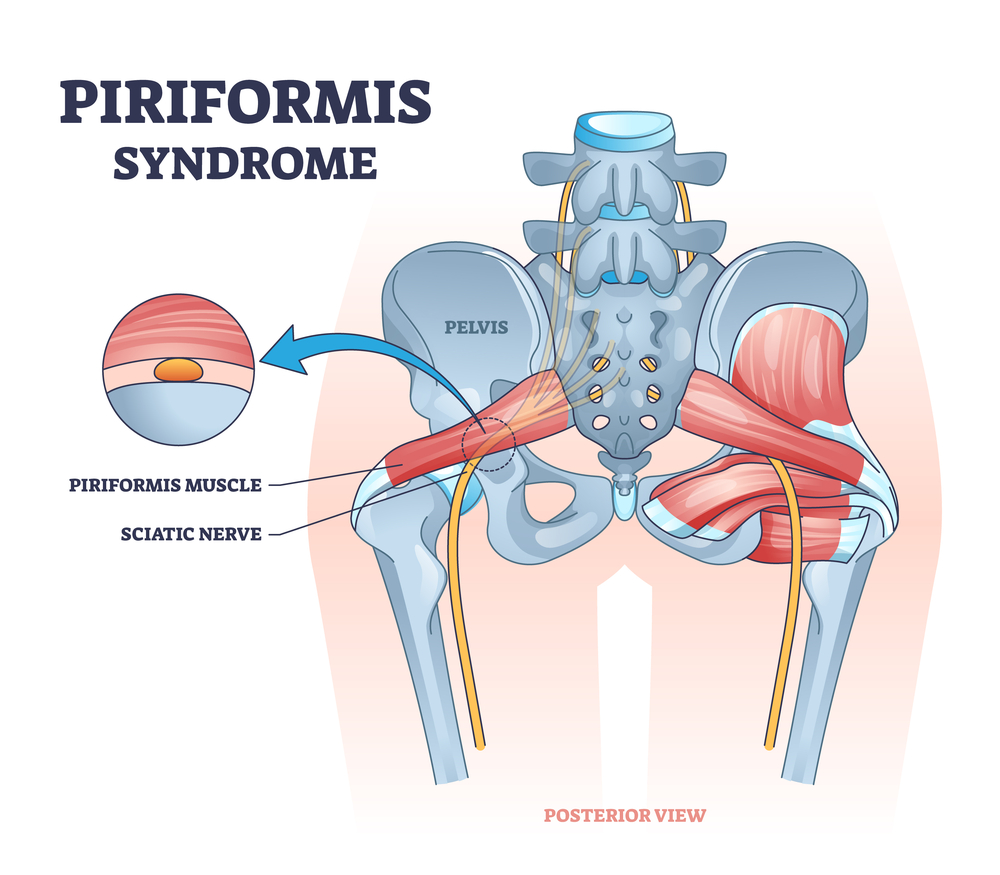
Piriformis syndrome is most commonly associated with sciatica. Other symptoms include;
The pain from piriformis syndrome usually only affects one side of the body but can also happen on both sides.
When it comes to treating Piriformis syndrome, the aim is to relieve pressure on the sciatic nerve and reduce pain. You may be recommended to follow the following self-care tips by your healthcare provider.
Chiropractic techniques can be an effective treatment for Piriformis syndrome. Some common chiropractic management strategies include manual therapies such as tissue mobilization and stretching to help restore normal muscle length and movement. Additionally, chiropractic adjustments to the pelvis and spinal column can provide relief by restoring proper function to the joints in the area. Low level laser therapy can also be used to relieve deep inflammation of the Piriformis muscle and surrounding tissues.
Piriformis syndrome is a condition that happens when the piriformis muscle compresses the sciatic nerve. The symptoms of this condition can include numbness, pain, or tingling in your butt, hip, or upper leg. With rest and simple treatment, piriformis syndrome usually subsides within a few days or weeks. However, if you have an injury that has led to the pain or if your symptoms last for more than a few weeks, it is important to talk to your healthcare provider.
References:
https://my.clevelandclinic.org/
https://www.health.harvard.edu/

This article is for general information only and is not medical advice. Talk with a provider about your own symptoms and care.
Our team can help you find the right next step. Call 330-493-0009.


Patients visit us from Canton, North Canton and across Stark County.